

Education
Planes of Development and Sensitive Periods in Montessori Education
Emine Çengelci
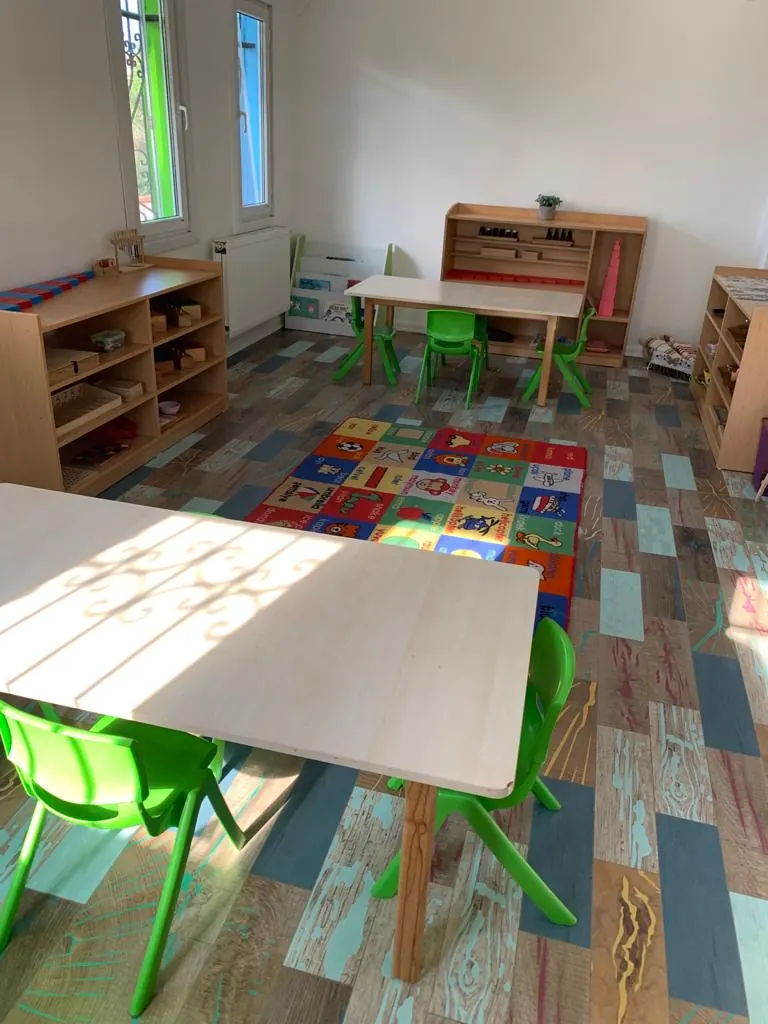
According to Montessori, child development is divided into four main planes, each with its own characteristics:
- First Plane: Ages 0–6
- Second Plane: Ages 6–12
- Third Plane: Ages 12–18
- Fourth Plane: Ages 18–24
The First Plane (Ages 0–6)
Montessori divided this plane into two sub-stages: the Unconscious Absorbent Mind (ages 0–3) and the Conscious Absorbent Mind (ages 3–6). During this period the child absorbs information like a sponge, and it is considered the most intense period of learning. The knowledge and skills acquired at this stage are extremely important, because missing this window makes later learning much harder. For example, ages 0–6 are the ideal time for learning language. The foundations of personality and individuality are laid during this period, and creativity, imagination, will and intelligence develop.
Sensitive Periods in Montessori Education
According to Montessori, a sensitive period is a temporary window of time during which children show an extraordinary desire and ability to learn a particular piece of knowledge or skill.
Every Sensitive Period
- Is a time of special sensitivity and disposition.
- Is a strong force and drive that directs children towards certain features and objects in their environment.
- Is a period in which children focus their attention on one particular thing in their surroundings and exclude everything else.
- Is a passion and an attachment.
- Comes from the unconscious and leads children towards conscious and creative activity.
- Is an intense, long-lasting activity that does not cause fatigue or boredom, but instead produces constant energy and interest.
- Is a temporary state that disappears once it has been understood and absorbed.
- Cannot be regained once it has passed, or can only be regained with great effort.
Sensitive Periods According to Montessori: A Closer Look
Movement
Between the ages of 0 and 6, children feel an incredible urge to move, coordinate hand and eye, and keep their balance. This period is a golden opportunity in which gross and fine motor skills such as walking, running, climbing and grasping objects develop naturally. By moving, the child discovers both their surroundings and their own body.
Language (Ages 0–6)
This is the period in which language is learned effortlessly through the "absorbent mind". Like a sponge, the child unconsciously absorbs all the words, sounds, grammar and pronunciation around them. Offering a rich language environment during this time helps the child lay strong foundations for their language skills.
Interest in Small Objects (Ages 1–4)
During this period, children's attention is drawn to even the smallest details that adults overlook. A speck of dust on the floor, an ant on the move or the tiniest leaf of a flower becomes a fascinating source of discovery. This interest helps sharpen their powers of observation.
Order (Ages 1–2)
Children in this period feel a strong need for order and consistency in their surroundings. Having toys always in the same place and keeping daily routines stable gives them a sense of security and control. Disorder can create a feeling of inner chaos. This sensitivity develops mental order and the ability to classify.
Music (Ages 2–6)
Children in this period are highly sensitive to rhythm, tone and melody. Listening to music, singing and playing simple instruments develop their auditory perception and sense of rhythm.
Grace and Courtesy (Ages 2–6)
In this age range, children become sensitive to the finer points of social interaction. They learn the rules of courtesy, such as greeting, saying thank you and apologising, by observing and imitating. This period lays the foundation for social harmony and empathy.
Refinement of the Senses (Ages 2–6)
Children feel a deep need to explore the world through their senses. The ability to distinguish and classify through touch, smell, taste, hearing and sight develops during this period. This is one of the areas that Montessori materials address most.
Writing (Ages 3–4)
In this period, which often comes before reading, children become curious about writing as the muscles of their hands develop. It is the best time for preparatory steps such as recognising letters, drawing and holding a pencil.
Reading (Ages 3–5)
As writing skills develop, the child begins to connect symbols (letters) with sounds. This sparks a natural interest in reading, and the child learns to read by sounding out or recognising words.
Spatial Relationships (Ages 4–6)
In this period children develop the ability to understand how objects relate to one another: their sizes, shapes and positions in space. Materials such as puzzles, blocks and maps support this period.
Mathematics (Ages 4–6)
In this period the child begins to understand abstract mathematical concepts through concrete materials. They are ready to learn quantities and basic operations such as addition and subtraction by touching and feeling. This lays the foundation for future mathematical thinking.
Explore Further
Would you like to learn more about the prepared environment and developmental materials at the heart of the Montessori philosophy? Read our article "The Foundation of the Montessori Philosophy: The Prepared Environment and Developmental Materials".
Share this article with people you care about.