Education
Montessori vs Traditional Preschool: The Key Differences
Emine Çengelci
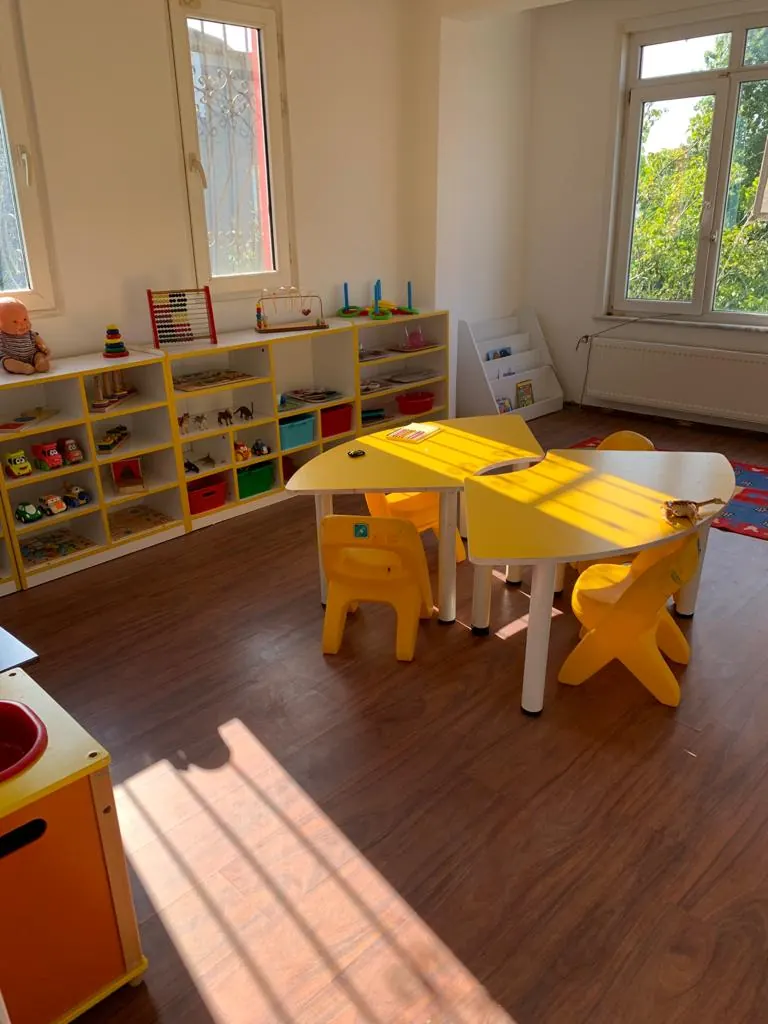
Parents looking into Montessori usually start with one question: "What makes a day in a Montessori classroom different from a traditional preschool?" Both care about a child's development; the difference is in how. Here are the concrete differences you will notice when you step into the classroom.
1. Who chooses?
In a traditional preschool the whole class usually does the same activity at the same time: colouring time, song time, play time.
In a Montessori classroom the child chooses from materials the teacher has already presented and works with them for as long as they like. The choice is free but has limits: materials go back on the shelf, and a friend's work is not interrupted.
2. The teacher's role
In a traditional class the teacher mostly stands at the front, explaining and leading. In Montessori the teacher (the guide) observes children one by one or in small groups, presents the right material at the right moment, and then steps back.
3. Materials
Montessori materials isolate one skill at a time, and most have a "control of error": the child sees the mistake without asking an adult. The pink tower, the knobbed cylinders and the sandpaper letters are well-known examples. There is usually only one of each material, which is how children learn to wait their turn.
4. Age groups
Montessori classes are usually mixed-age (for example 3–6). Younger children learn by watching older ones, and older children consolidate what they know by showing it. Traditional preschool classes usually group a single age.
5. Time
Montessori mornings include a long, uninterrupted work period. When a child is absorbed in something, no bell rings and the activity does not change. This helps attention span grow.
6. Rewards and punishment
Instead of stickers or stars, Montessori relies on the satisfaction children feel from their own work. Discipline is not a list of rules imposed from outside but self-control the child gradually develops.
7. Practical life skills
Pouring water, wiping a table, doing up buttons, rolling dough... In a Montessori classroom these are not games but "practical life" work, and they lay the groundwork for fine motor skills, concentration and independence.
Which is right for my child?
Every child is different and there is no single right school. Before deciding, we suggest visiting both kinds of school and watching a morning work period. How your child behaves in the room will tell you the most.
How we do it
At our school in Çubuklu, Beykoz, Montessori is the foundation of our teaching, and we also draw on the Waldorf and Reggio Emilia approaches. To read more about the Montessori method or see our classrooms in person:
Share this article with people you care about.