

Psychology
The Peace Table: Managing Emotions and Resolving Conflict in Children
Emine Çengelci
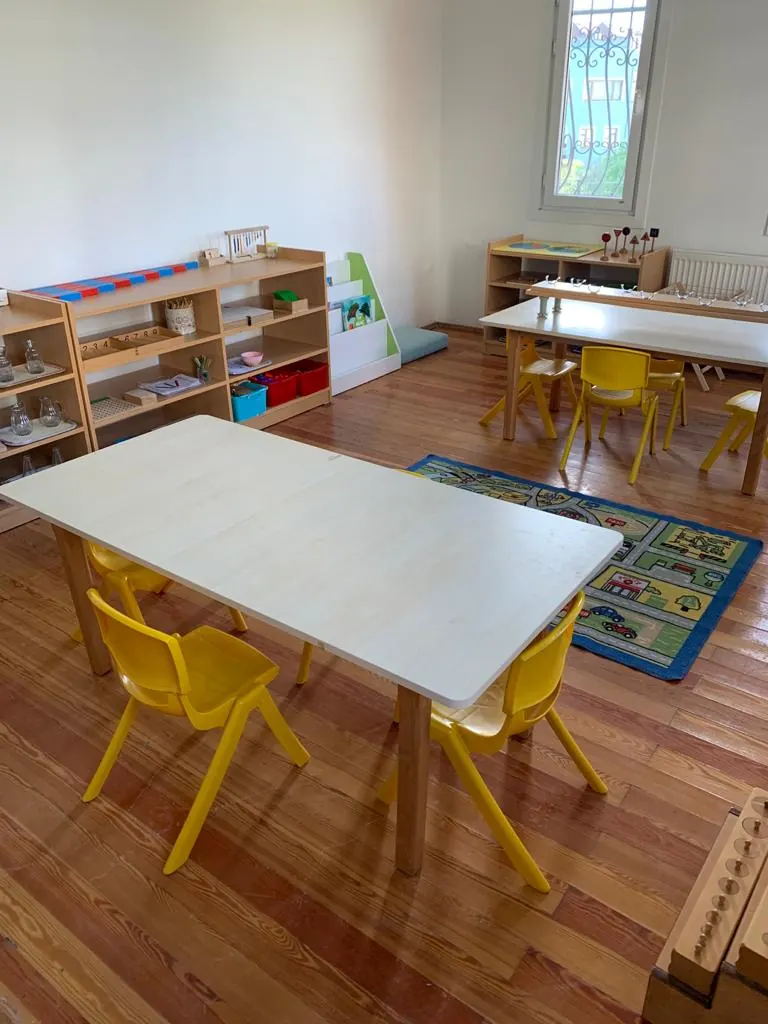
Childhood is the time when emotions are felt most intensely and with the fewest filters. Teasing, fights over toys and disagreements are normal in any preschool. But how do we as adults react in the moment? Does saying "Say sorry to your friend right now!" or forcing children to make up really create lasting empathy?
Montessori pedagogy has a special tool for developing children's emotional intelligence and problem-solving skills: the Peace Table.
What Is the Peace Table and How Does It Work?
The Peace Table is a special spot in a quiet corner of the classroom. On it there is usually a small plant, an hourglass or a "peace object" that can be held, such as a smooth stone or a wooden heart.
When a disagreement arises between two children, the guide (teacher) does not solve the problem from above by taking sides or acting as a referee. Instead, they invite the children to the Peace Table.
Steps for Resolving Conflict
- The talking object: The child who wants to speak picks up the peace object. Only the child holding it speaks, while the other listens actively. This rule prevents interrupting and shouting at each other.
- Expressing feelings: Instead of blaming, the child learns to express their own feelings: "I was very sad and angry because you knocked down my tower." The feeling is named and made visible.
- Building empathy: When it is the other child's turn, they also explain their reasons and feelings. The teacher is only a facilitator who keeps the conversation safe.
- Finding a solution: Apologising is not required. Instead, the question is: "How can we fix this now? What can I do to help you feel better?" Children often come up with solutions so fair and creative that they surprise adults.
Maria Montessori built her educational philosophy not only on academic achievement, but on raising generations who would bring peace to the world.
A child who learns at the Peace Table to express feelings without violence will grow into a constructive, empathetic and solution-focused adult at work, at home and in society.
Explore Further
If you would like answers to all your questions about the Montessori philosophy and want to take the first step towards this approach, visit our Frequently Asked Questions page.
Share this article with people you care about.