Welcome to Çengelci Montessori
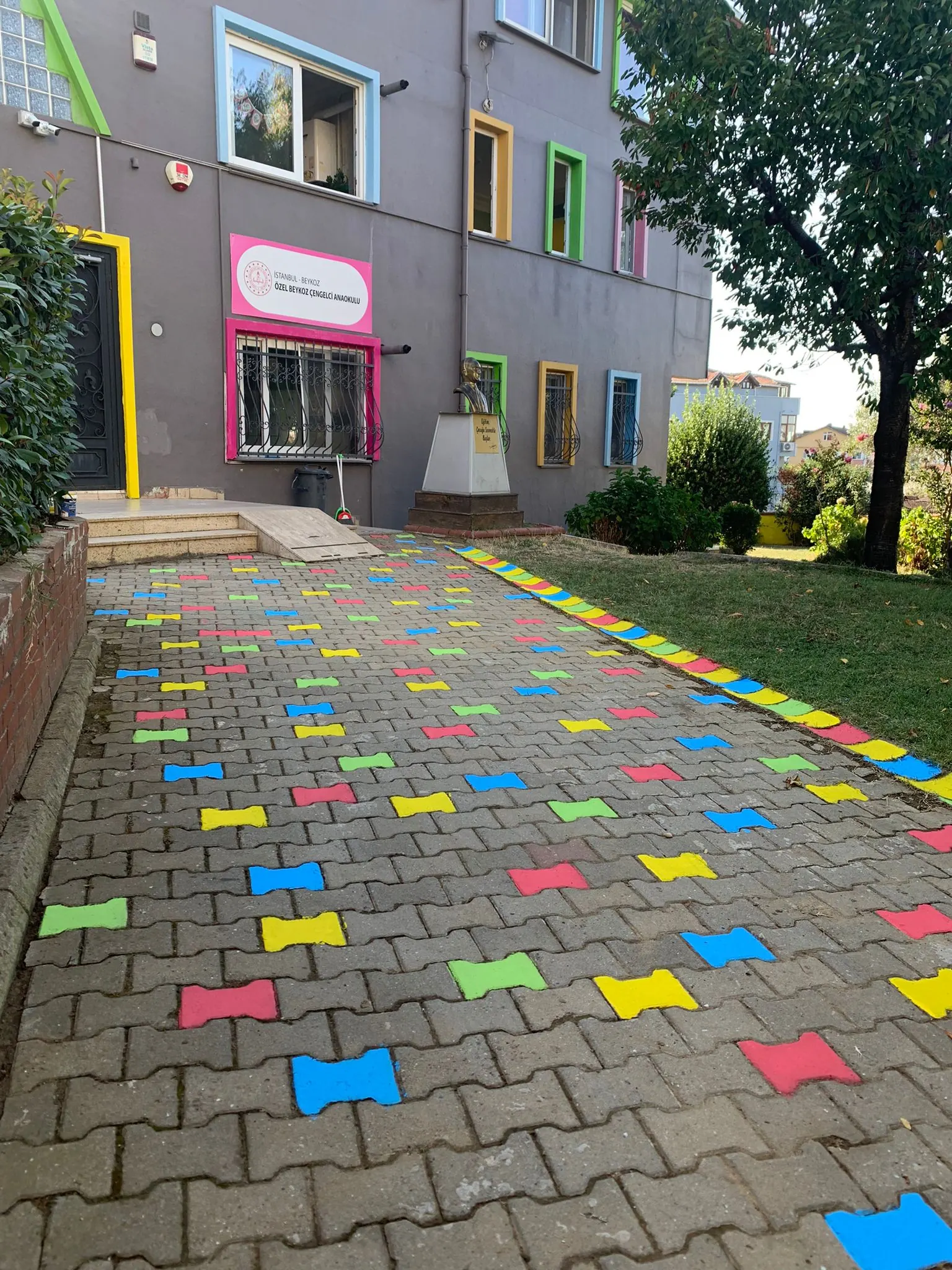
Step through the garden gate in our colourful stone wall and you will find small classrooms, wooden materials and a garden full of running children.
- Ages 2–6Children aged 24–72 months
- 08:00 – 18:00Every weekday
- Small classesClose attention for every child
- School busRoutes planned every year
- Çubuklu, BeykozA green campus with a garden
Our core values
Our vision
To raise independent, happy citizens of the world who know their own potential and respect universal values.
Our mission
To nurture children's natural curiosity with care, offer them a safe and rich "prepared environment", and respect each child's rhythm of learning.
Our approach
A child-centred approach grounded in Maria Montessori's scientific work and enriched by Waldorf and Reggio Emilia: inner self-discipline instead of external control, and a love of learning.
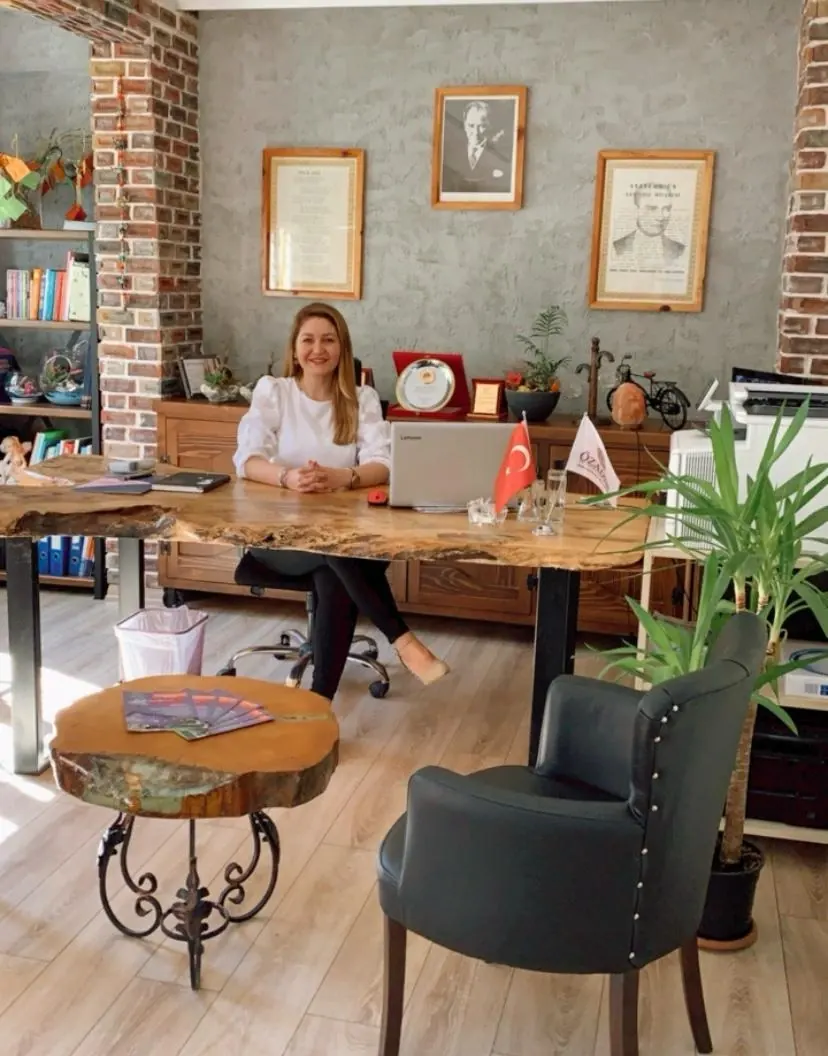
Emine Çengelci
Founding Principal · Education built on experience and care
- Began her path in education at Afyonkarahisar Anatolian Teacher Training High School (2001) and earned her bachelor's degree in Preschool Teaching from Selçuk University (2005).
- Completed a master's degree with thesis in Educational Sciences at the Institute of Social Sciences, Afyon Kocatepe University (2014).
- Holds a Montessori Education Certificate from KTO Karatay University (2017) and is a member of AMI (Association Montessori Internationale).
- Carried out on-site observations at Montessori schools in Germany.
- Has more than 20 years of professional experience with children.
“Every child is a universe waiting to be discovered.”
Montessori at the core, open to other good ideas
The backbone of our teaching is the Montessori method. We also bring into daily life the parts of the Waldorf and Reggio Emilia approaches that are good for children.
Montessori
A prepared environment, real materials and work the child chooses. The teacher observes and guides rather than lectures.
Waldorf
A calm daily rhythm, time spent in nature, handwork, music and stories. Letting childhood unfold without rushing it.
Reggio Emilia
Small projects that grow out of children's own questions; expressing themselves through drawing, building and talking, and documenting their work together.
What does a day at school look like?
Our day has a calm, predictable rhythm. Children know what comes next, and that helps them feel safe.
morning
Arrival
A teacher welcomes each child at the door. Children put away their own shoes and coats, and parents have a short morning chat with the teacher.
starting the day
Morning circle
We say good morning and look at the calendar, the weather and the plan for the day together. A song, a short story, and everyone gets a turn to share.
mid-morning
Montessori work period
Children choose materials from the shelves and work without interruption. Teachers give one-to-one presentations and observe and take notes on each child.
late morning
Garden and the outdoors
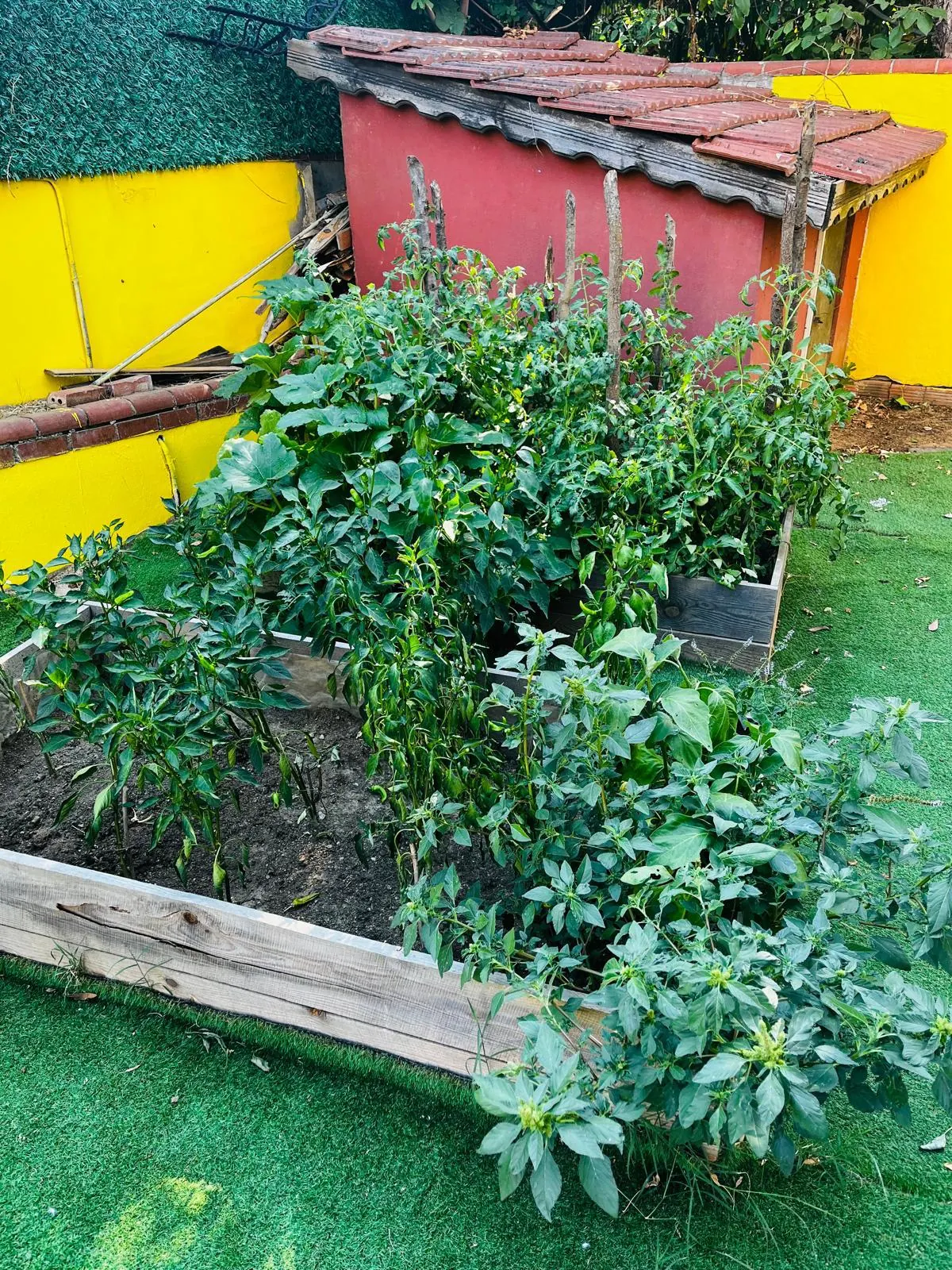
Free play in the garden, caring for the vegetable beds, getting to know soil and water. Short walks nearby when the weather is good.
midday
Lunch and rest
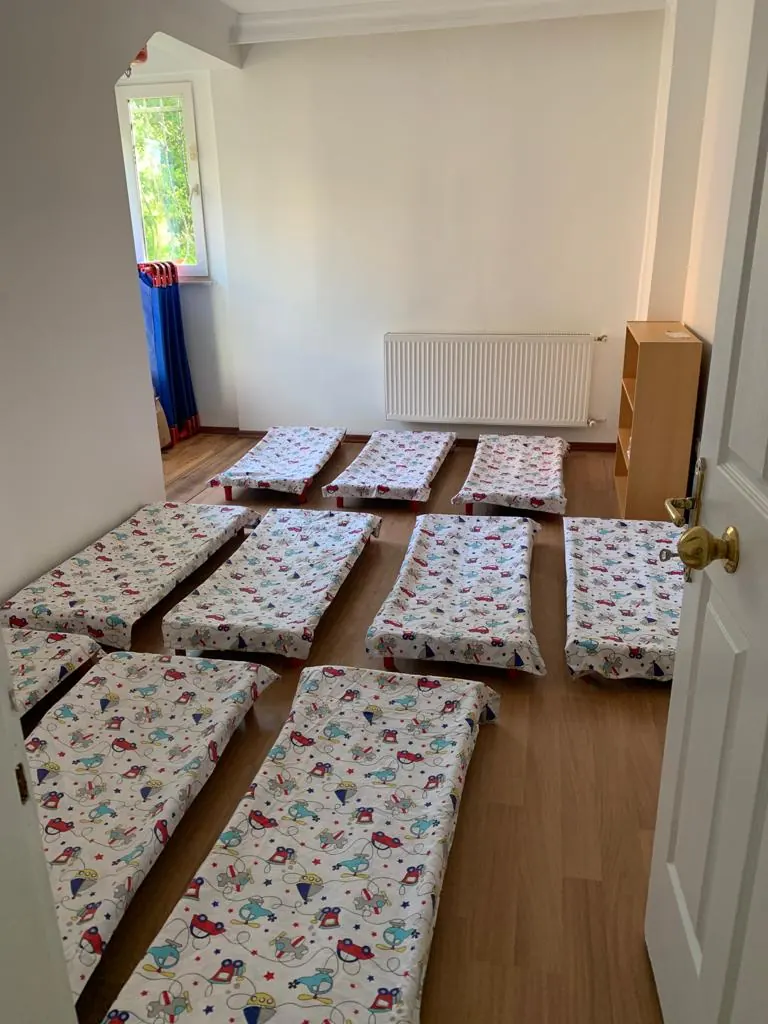
We eat a meal cooked in the school kitchen together; children help set and clear the table. Then a quiet rest.
afternoon
Workshops and projects
Workshops such as English, music, dance and yoga; drawing, building and small projects that grow out of the children's own questions.
late afternoon
Wrapping up and pick-up
We tidy the classroom together and talk about the day. At pick-up, parents hear from the teacher how the day went.
The flow adapts to the season, the weather and the age group; this is a sample day.
Workshops that colour our week
Academic and artistic workshops where children discover their different talents.
English every day
Learning a language through games and songs.
Robotics & coding
Algorithmic thinking and problem solving.
Dance
A sense of rhythm and body coordination.
Kids yoga & breathing
Body awareness and focus.
Gymnastics & movement
Balance, flexibility and confidence.
Ballet
Grace, discipline and good posture.
Piano
Listening skills and hand-eye coordination.
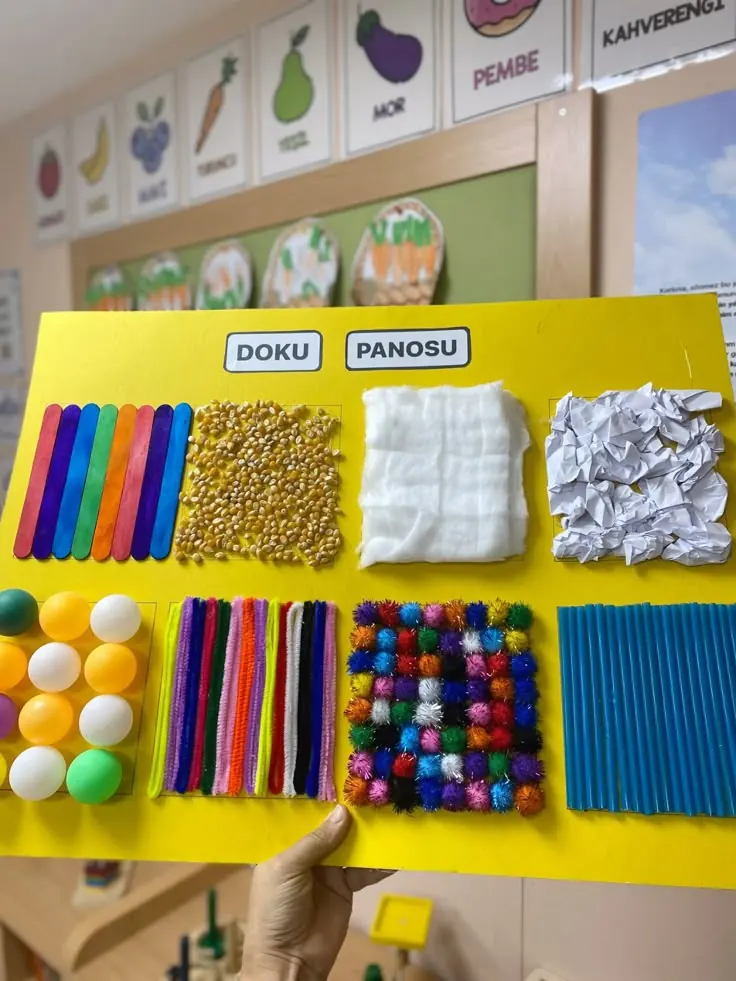
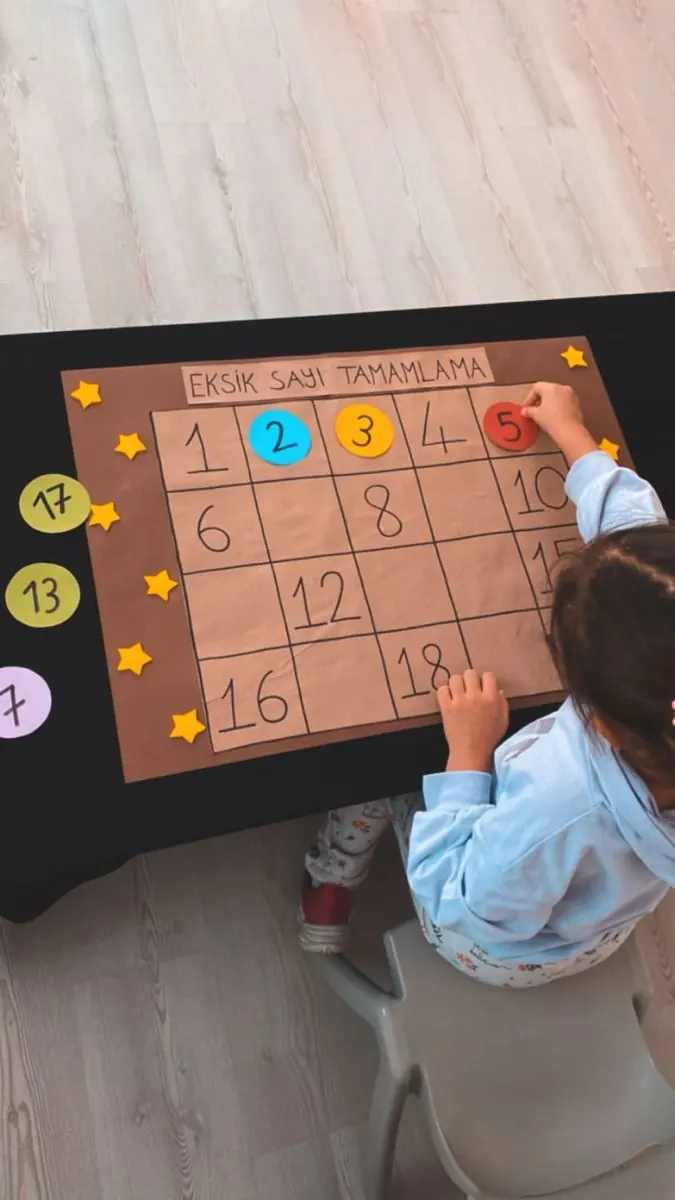
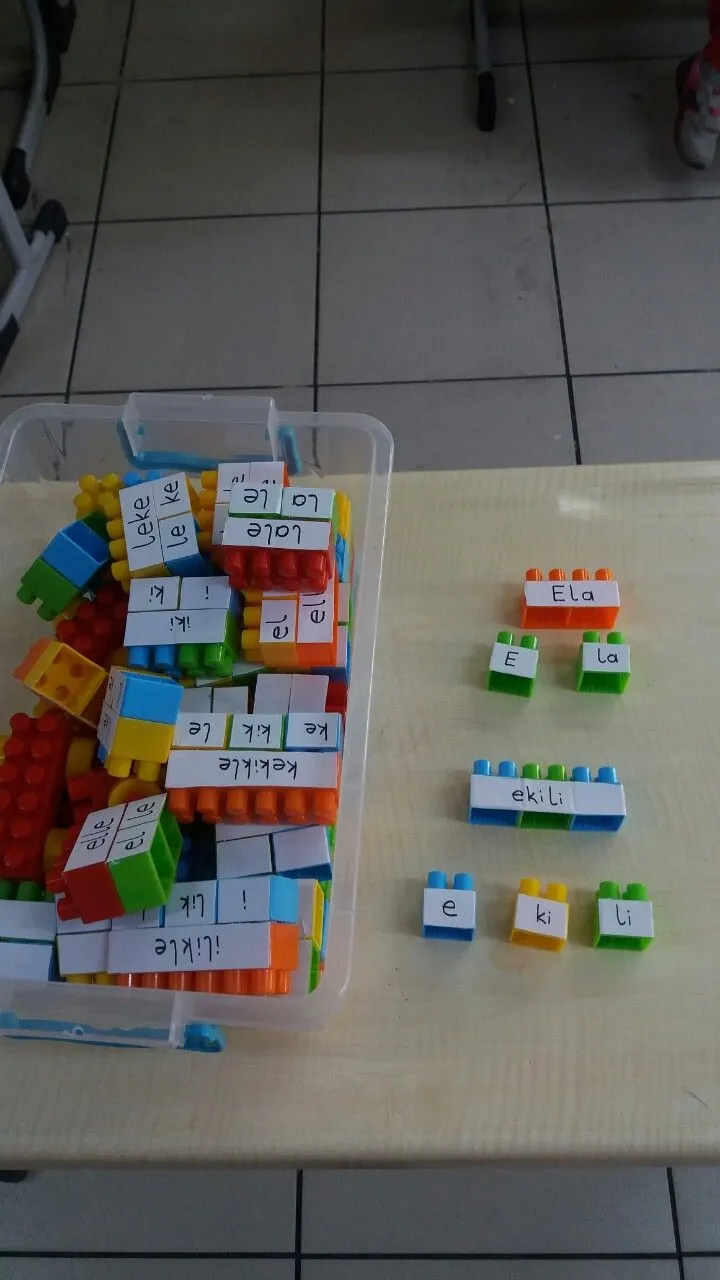
An environment you learn by touching
With natural, tactile materials, children experience concepts in a concrete way. Each material is chosen to develop a particular skill.
The prepared classroom
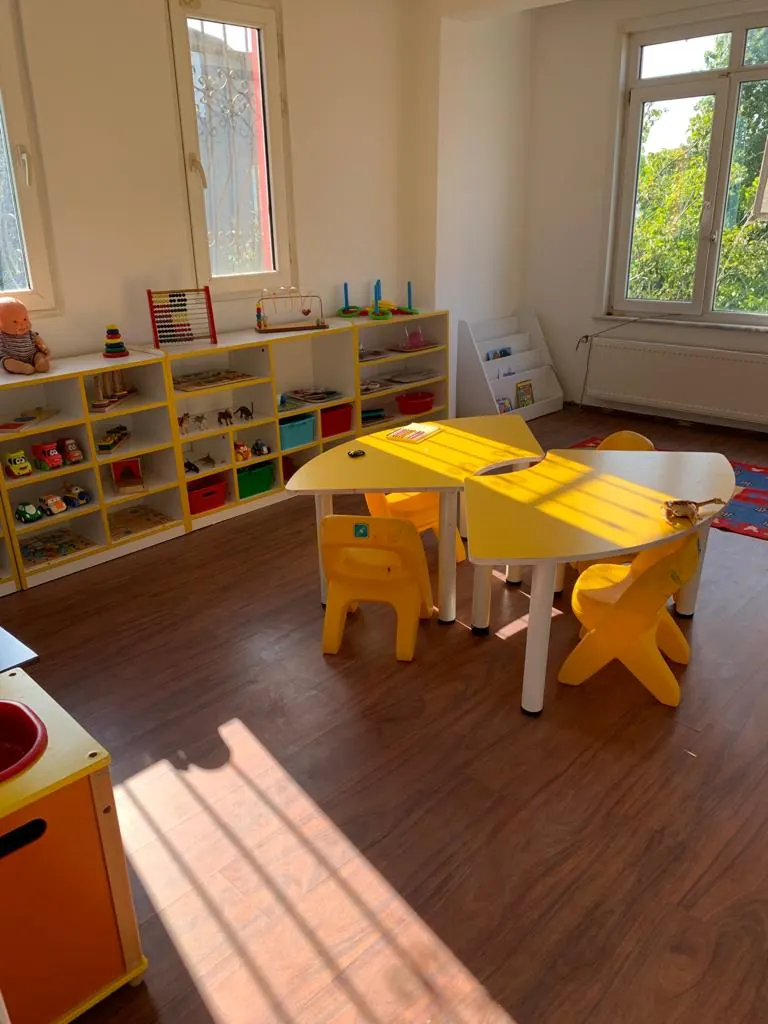
Our classrooms are arranged around each child's own pace of learning; every corner is designed for discovering things independently.
- Natural light
- Wooden materials
- Open shelves
So they can do it themselves
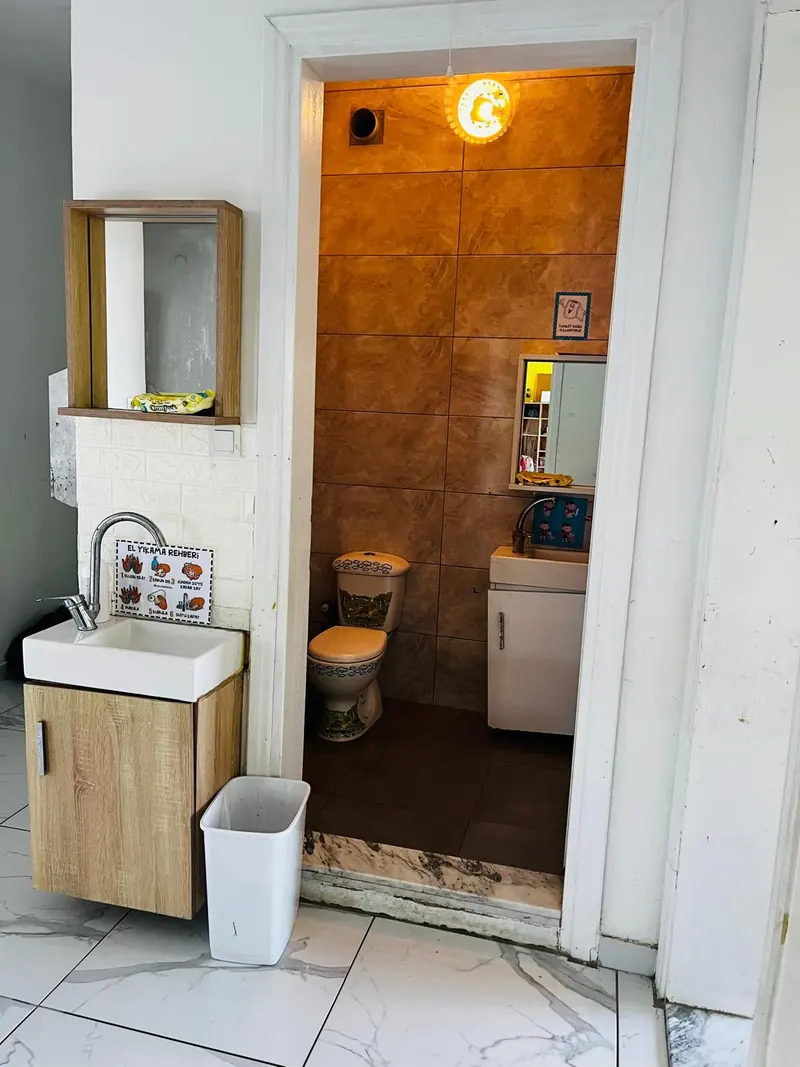
Sinks, toilets, hooks and rest beds are all at children's height. A child never needs an adult just to wash their hands or lie down for a rest.
A play area close to nature
In our green garden, children learn to share, move together and explore their surroundings while they play. Contact with the soil is part of growing up.
Book a visit