Education
Montessori Education: An In-Depth Guide
Emine Çengelci
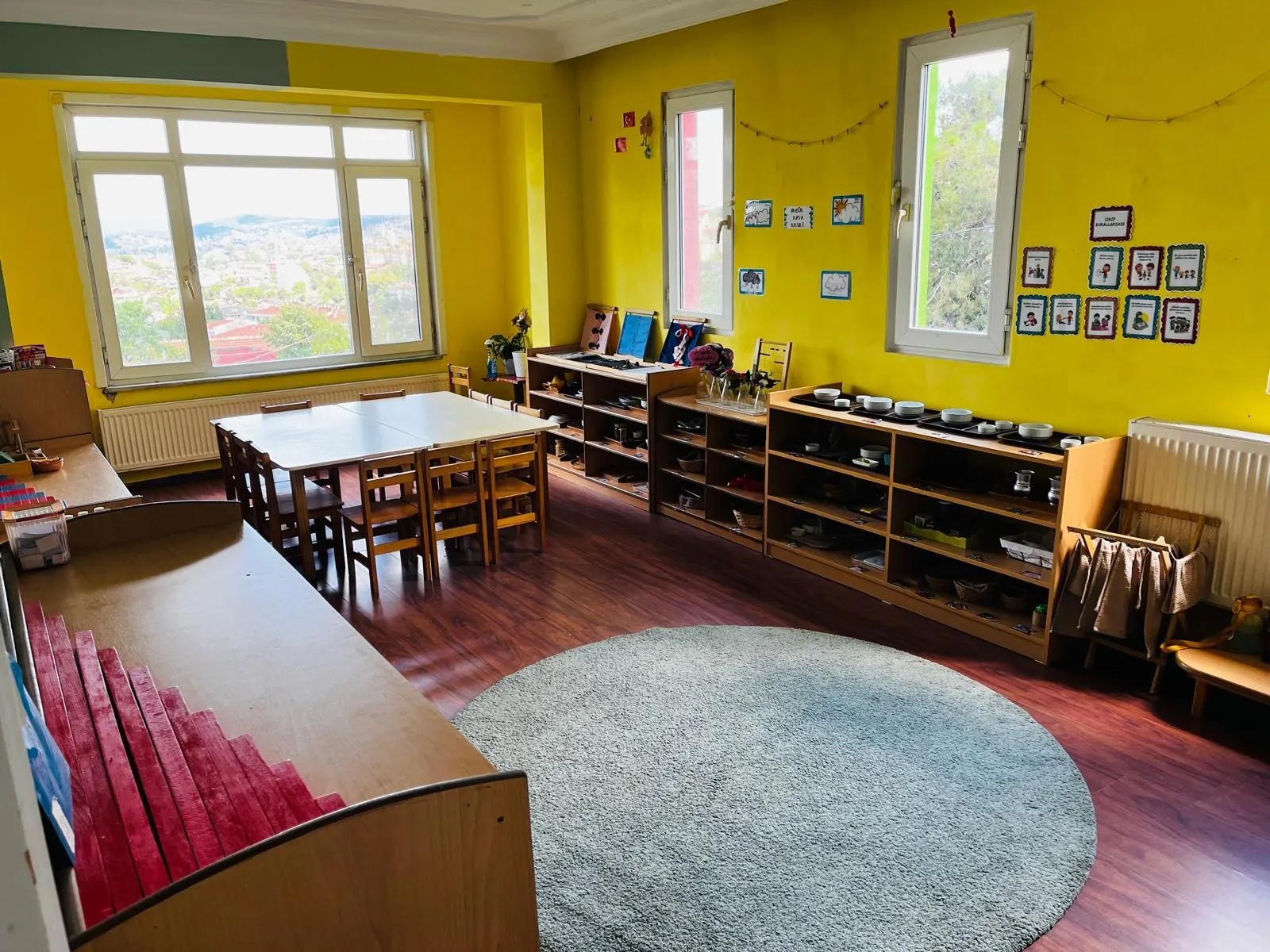
Montessori education is a groundbreaking pedagogy developed in the early 20th century by the Italian physician and educator Maria Montessori. It puts children's natural desire to learn and their individual potential at the centre. This approach sees children not as passive recipients, but as active architects of their own learning.
Who Was Maria Montessori?
Maria Montessori, the founder of Montessori education, was born in 1870 in Chiaravalle, Italy. At a time when girls were raised to become good wives and mothers, Maria was interested in science and mathematics. Despite her father's objections, and with her mother's support, she attended a technical school to study the sciences. While studying engineering, her interest in biology grew into a passion, and in 1896 she became one of the first women in Italy to qualify as a doctor.
Women's Rights and a Medical Career
Beyond her qualities as a scientist, Montessori was ahead of the values of her time and always fought for women's rights. As one of Italy's first women doctors, she was chosen to represent Italy at women's congresses in Berlin in 1896 and in London in 1900, where she called for equal pay.
Working with Children with Intellectual Disabilities
After graduating, she was appointed assistant doctor at the psychiatric clinic in Rome, where she began working with children with intellectual disabilities. It was during this period that she developed the idea that intellectual disability was a pedagogical rather than a medical issue. In 1899 she was appointed director of the new orthophrenic school in Rome. Through her work between 1899 and 1901, she showed that these children, who had been labelled hopeless, made unexpected progress when given attention and care: they learned to read and write, and some even passed the state examinations alongside other children.
The Birth of the Montessori Method
In 1907 she opened the first Children's House (Casa dei Bambini) and continued developing her method there. At the school's modest opening ceremony she said: "Today the opening of this school does not attract much attention, but soon many people will be interested in this little school." Time proved her right.
International Recognition
Montessori first visited the United States in 1913 and won the support of prominent figures such as Alexander Graham Bell, Thomas Alva Edison and Helen Keller. In 1915 her glass-walled classroom at the Panama-Pacific International Exposition attracted wide attention. Because she opposed the fascist regime, she had to leave Italy in 1934, and in 1938 she opened a Montessori Teacher Training Centre in the Netherlands. Having lived through many wars, Montessori shaped her method as a tool for peace. For her work for peace she was nominated for the Nobel Peace Prize in 1949, 1950 and 1951.
The Philosophy of Montessori Education
Unlike traditional education, Montessori education puts the child at the centre. The teacher is not an authority who transmits knowledge, but a guide who encourages the child to learn independently. In this system, children explore the world in an environment prepared for them in advance, yet one that remains natural. The materials, which Maria Montessori called "keys to the world", allow children to learn by touching, experimenting and observing.
Montessori education accepts that every child is inclined to learn. Success is measured not by how much children learn compared with one another, but by the joy a child takes in learning. According to this philosophy, children enjoy:
- Free choice
- Movement
- Silence
- Forming their own social relationships
- Checking their own mistakes
- An orderly and clean environment
- A sense of discipline based on free activity
Explore Further
Would you like to learn more about the planes of development and sensitive periods in Montessori education? Read our article "Planes of Development and Sensitive Periods in Montessori Education".
Share this article with people you care about.